Rwanda's journey from the devastation of the 1994 genocide to becoming one of Africa's fastest-growing economies is one of the most remarkable development stories of the modern era. In approximately 100 days, an estimated 800,000 to 1 million Tutsi and moderate Hutu were killed, infrastructure was destroyed, two million people were displaced, and the country's institutions collapsed entirely. International observers saw a nation with no future. Three decades later, Kigali is consistently ranked among Africa's cleanest and safest capitals, Rwanda's economy has grown at an average of 7–8% a year, and the country is positioning itself as East Africa's technology hub.
This essay examines the mechanisms of Rwanda's transformation and explores what Haiti might learn and adopt from it, not as a blueprint to be copied blindly, because the cultures, geographies, and traumas are very different, but as a mirror in which Haiti's own possibilities come into clearer focus. Rwanda's leadership has been criticized, often fairly, for its limits on political freedom. This essay does not ignore that record. But it argues that the underlying machinery, accountable government, community-level reconciliation, disciplined investment in people and infrastructure, and a relentless insistence on cleanliness and order, is transferable, and that Haiti, with its own assets and its own history, could build a version of this transformation suited to its own context.
🕯️
Rwanda, 1994
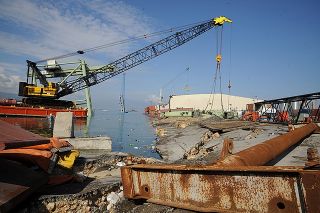
Photo placeholder — aftermath of the genocide
Rwanda, 1994: a country of two million refugees, collapsed institutions, and a death toll in the hundreds of thousands — with almost no international expectation of recovery.
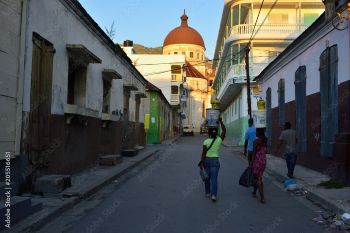
Port-au-Prince, 2011: a city of resilience and potential, facing deep challenges that strong leadership and strategy could help transform.
Part One
Rwanda's Starting Point — The 1994 Genocide and Its Aftermath
The Tragedy
The Rwandan genocide of 1994 was one of history's most horrific atrocities. In approximately 100 days, an estimated 800,000 to 1 million Tutsi and moderate Hutu were killed by Hutu extremists. The violence destroyed roads, hospitals, and schools, displaced two million people into neighboring countries, and left survivors with deep psychological trauma. Government institutions and the legal system collapsed entirely, and the country faced near-universal poverty and food insecurity. The international community, having largely failed to intervene during the genocide itself, was openly skeptical that Rwanda had any viable future as a nation.
By every conventional measure, Rwanda in 1994 was a failed state at its founding moment, with no resources, no institutions, and a population divided by the deepest possible wound. There was, in the eyes of much of the world, no path forward.
Challenge
Rwanda (1994)
Haiti (2024–2026)
Physical Destruction
Widespread infrastructure damage
Gang violence destroying urban areas; natural disasters
Governance
Collapsed institutions
Weak and often corrupt government; institutional dysfunction
Security
Post-conflict violence
Gang violence, kidnapping, human trafficking
Poverty
>80% living on <$1/day
>60% living in poverty; limited economic opportunity
International Support
Present but conditional
Present but often ineffective without strong local leadership
Building a Nation: Leadership, Reconciliation, and Economic Strategy
Rwanda's transformation began with visionary, stable leadership under President Paul Kagame, who took power in 1994 and has remained the dominant political figure since. Rwanda's governance model has been criticized, often fairly, for its authoritarianism: tightly controlled opposition, media, and civil society. But that consolidation of power also provided the stability necessary for reconstruction, at a moment when neighboring post-conflict states fragmented into renewed violence. Kagame articulated a clear long-term vision, a united, prosperous Rwanda under "Vision 2050", promoted administrators on merit regardless of ethnicity, and set ambitious targets for which government was held accountable.
Rwanda did not treat reconciliation, governance, and economic strategy as a sequence. It built all three at once, and each made the others possible.
"Rwanda did not wait for a perfect government before cleaning its streets, reconciling its communities, and building its institutions. It built all three at once, and each made the others possible."
— Harold J. Eustache Sr., Esq., Editor in Chief
Pillar 1: Visionary, Stable Leadership
Rwanda's leadership combined a clear long-term vision with consolidated political power, merit-based appointments that reduced corruption regardless of ethnicity, and a results culture in which government was held to its own published targets. Inclusive rhetoric, emphasizing a single Rwandan identity, was paired with firm authority. The trade-off, fewer democratic freedoms, is real and is discussed honestly later in this essay. But the stability it produced was the precondition for everything that followed.
Pillar 2: Reconciliation Through Gacaca
Rather than relying solely on international tribunals, Rwanda revived the traditional Gacaca court system, community-level hearings where perpetrators confessed, victims were heard, and former killers were reintegrated into the villages where they had to face those they harmed. This was not abstract reconciliation. It was practical: neighbors who had to live next to each other again were given a structured way to do so. National unity was emphasized over ethnic identity, and while tensions persist beneath the surface, Rwanda avoided becoming a nation of permanent grievance.
Pillar 3: Economic Diversification
Pre-war Rwanda depended almost entirely on subsistence agriculture. The government pursued deliberate diversification: modernizing agriculture toward higher-value coffee and tea through cooperatives and extension services; building processing facilities so more value was captured domestically rather than exported raw; making a bold, early bet on fiber-optic infrastructure and technology that positioned Rwanda as an "African Singapore" for ICT services; marketing its natural beauty, especially the mountain gorillas of Volcanoes National Park, into a tourism sector that now contributes significantly to GDP; and carefully regulating mining of tin, tantalum, and tungsten so it generated revenue without dominating or distorting the economy.
💻
Kigali Innovation City
Photo placeholder — Kigali's technology and innovation district
With international aid, Rwanda rebuilt and expanded an extensive road network connecting rural and urban areas, expanded electricity generation toward near-universal access, invested heavily in clean water and sewage systems, laid fiber-optic networks across much of the country, and rebuilt hospital systems and primary care. These investments compounded: roads connected farmers to markets, electricity enabled manufacturing and small business, and connectivity enabled the digital economy that followed.
Pillar 5: Institutions and Rule of Law
Rwanda built a meritocratic civil service that reduced corruption, established independent anti-corruption and transparency agencies, streamlined business registration and strengthened property rights, rebuilt courts and legal institutions, decentralized authority to districts so development decisions could be made closer to communities, and implemented nationwide land registration that gave citizens the security to invest in their own property.
Pillar 6: Human Capital and Healthcare
Recognizing that people were its only real asset, Rwanda expanded primary and secondary education with an emphasis on STEM and technical skills, built a university system and sent students abroad for advanced training, developed technical and vocational training to build a skilled workforce, invested in maternal health and infectious disease control, and built social protection programs that reduced extreme poverty among the most vulnerable.
Pillar 7: Environmental Stewardship
Rwanda made environmental protection part of its national brand: millions of trees planted, giving it one of the highest forest coverage rates in East Africa; expanded national parks and conservation areas; one of the first plastic bag bans on the continent; and green building standards required in new construction. This was not cosmetic. It enhanced Rwanda's international reputation, supported its tourism sector, and materially improved residents' quality of life.
Pillar 8: Strategic Regional Integration
Rather than isolating itself, Rwanda joined the East African Community and the Common Market for Eastern and Southern Africa, gaining access to larger markets, positioned itself as a stable partner and mediator in regional affairs, and made itself an attractive base for multinational companies serving the broader East African region.
Part Four
Results — Rwanda Today
5×
Rwanda's poverty rate fell from over 85% in 1994 to under 16% by 2024, one of the fastest sustained reductions in extreme poverty ever recorded, while GDP per capita rose from roughly $200 to over $1,000 and the economy grew at an average of 7–8% a year.
Cleanliness and Urban Development
Kigali is consistently ranked among Africa's cleanest cities. Through "Umuganda," a monthly community service day in which citizens voluntarily clean and develop their neighborhoods, combined with strict waste management and enforcement of environmental regulations, Rwanda transformed its capital into a place that attracts tourists and investors, which in turn generates more resources for further improvement. It is a positive feedback loop, and it cost far less than most of the infrastructure investments around it.
Tech Hub Status
Rwanda has positioned itself as East Africa's technology hub. Kigali hosts numerous startups, incubators, and innovation centers; coding academies have trained a generation of East African developers; and the government's "Digital Rwanda" initiative targets digital transformation across the economy. High-speed internet and mobile technology have reached rural areas, enabling fintech and e-commerce far beyond the capital.
Regional Stability
Rwanda is not without tension, including periodic involvement in conflicts in the Democratic Republic of Congo, discussed honestly below. But compared with its immediate neighbors, it has achieved remarkable stability, and that stability has been central to attracting the investment that powered its growth.
Rwanda's story is not flawless, and understanding both its successes and its costs is critical for Haiti. Rwanda's stability has come partly at the expense of democratic freedoms: Kagame has tightly controlled opposition, media, and civil society. That control prevented the political fragmentation that has plagued some of its neighbors, but it raises real questions about long-term legitimacy. For Haiti, the lesson is that some degree of strong, coordinated governance may be necessary in the early stages, but it must eventually transition toward more inclusive democracy, an exit ramp Rwanda itself has yet to fully build.
Rwanda also remains partially dependent on international aid despite diversifying its economy, has been involved in periodic regional tensions including in the Democratic Republic of Congo, and, even as poverty has fallen overall, inequality and rural-urban disparities have grown alongside rapid, sometimes informal, urbanization in Kigali. These are honest caveats that any country adapting Rwanda's model, including Haiti, must address from the outset rather than in retrospect.
Cap-Haïtien Street
Haiti's Current Context — 2024
Haiti's challenges differ in origin from Rwanda's but are equally severe. Haiti inherited centuries of colonial exploitation and slavery, repeated foreign interventions including a 19-year US military occupation, authoritarian dynasties, weak institutions, and persistent corruption, all compounded by extreme poverty, inequality, and exposure to earthquakes, hurricanes, and floods. Today, gang violence has spiraled in Port-au-Prince and other cities, with armed groups controlling territory, kidnapping for ransom, and preventing ordinary economic life. Government institutions are weak and often corrupt, the judiciary is ineffective, tax collection is poor, and basic public services are minimal in much of the country. The economy has stagnated for years, the formal private sector is small, agriculture is largely subsistence-level, and remittances, while critical to many families, create dependency. Haiti has one of the lowest forest coverage rates in the world, and educated Haitians continue to emigrate at high rates, removing human capital and creating a leadership vacuum.
The critical difference from Rwanda: Rwanda's institutional collapse in 1994, while total, was the product of a single catastrophic event after which a unified national narrative of reconstruction could be built. Haiti's dysfunction has accumulated over generations, with no comparable unifying moment, and its divisions are rooted in class, color, and geography rather than recent mass violence. This does not make transformation impossible. It makes the work of building a shared national narrative, and the sequence of priorities that follows it, considerably harder.
Advertisement
728 × 90 — Mid-Article Leaderboard
Targeted placement mid-content · High engagement zone · [email protected]
Part Six
Haiti's Path Forward — Applying Rwanda's Model
Haiti possesses natural assets of genuine value: beaches, mountains, Hispaniola biodiversity, and a rich cultural heritage. Like Rwanda's gorillas and volcanoes, these are strategic assets that, with security and investment, could power a tourism sector employing millions.
Precondition: Security First
Rwanda's transformation began from a baseline of post-conflict order: the violence had ended, and a single authority controlled the country. Haiti has not yet reached that baseline. Without security and government control, nothing else on this list is possible. Haiti must build indigenous capacity in the Haitian National Police, with proper funding, training, and accountability; recruit officers from the communities they serve with transparent hiring; ensure courts, prosecutors, and jails actually function so gang members face consequences; pursue gang de-escalation and reintegration alongside enforcement; and use international support as a resource, not a substitute for Haitian ownership of the process. The honest timeline is two to five years for initial stabilization and ten or more years for sustainable security.
Core Element 1: Accountable, Legitimate Governance
Haiti has formal democratic structures, but elections are often contentious, corrupt, and delegitimized, leaving government without the authority to implement decisions. Like Rwanda, Haiti may benefit from stronger, more coordinated governance in the short term, but unlike Rwanda, it must plan an exit from that arrangement from the start rather than relying on indefinite strong-man rule. This means clear leadership that articulates and commits to a vision; a meritocratic civil service that reduces patronage; independent anti-corruption oversight with real enforcement power; transparent, visible budgeting; decentralization of power to departments and communes; and a gradual, deliberate widening of political space as institutions strengthen.
Core Element 2: National Reconciliation and Unity
Haiti carries deep wounds from slavery, colonialism, occupation, and dictatorship, and class and color divisions persist, with elite capture of institutions and land marginalizing the majority. Unlike Rwanda's post-genocide reconciliation, Haiti's divisions are about class and historical injustice more than recent mass violence, but Gacaca's underlying lesson, that reconciliation has to happen at the community level, not only in a courtroom or a treaty, still travels. Haiti needs a national narrative that moves beyond victimhood, inclusive leadership that brings regional, class, color, and gender diversity into governance, land redistribution that addresses historical seizures, economic inclusion for poor and rural Haitians, and education that teaches shared heritage and a shared future. The diaspora must be engaged as a partner in that vision, not only as a source of remittances.
Core Element 3: Economic Diversification
Haiti's economy today is dominated by subsistence agriculture, informal services, and remittances, with manufacturing diminished and exports minimal. Following Rwanda's example, Haiti can modernize agriculture through soil conservation, high-value crops like cacao, coffee, and mangoes, farmer cooperatives, and secure land rights; build light manufacturing and assembly in special economic zones that take advantage of Haiti's labor force and proximity to the United States, reviving its historical strength in textiles and apparel and processing local agricultural output rather than exporting it raw; develop tourism around Haiti's beaches, mountains, music, art, and history, recognizing that this sector absolutely requires security first; and grow a services and digital economy, leveraging Haiti's French and Creole speakers for business process outsourcing, software development, and the kind of mobile money and e-commerce platforms that reached even rural Rwanda.
Core Element 4: Infrastructure and Services
Haiti lacks reliable electricity, water, roads, and internet for most of its population. Priorities include renewable energy and grid modernization aimed at 60–70% electrification within fifteen years, with off-grid solar for areas the grid will not reach soon; urban water systems for Port-au-Prince and clean water points in villages, targeting 80% access within ten years; rehabilitation of priority road corridors and modernization of the Port-au-Prince and Cap-Haïtien ports; and expanded mobile and fiber connectivity aimed at over 80% internet penetration within ten years. None of this is optional, and all of it creates jobs during construction while enabling private investment once complete.
Core Element 5: Education and Healthcare
Haiti's education system is fragmented and often fee-based, excluding poor children, and healthcare is rudimentary outside Port-au-Prince. Rwanda's experience suggests free or heavily subsidized universal primary education with meals, competitive teacher pay, a curriculum emphasizing literacy, numeracy, and STEM, and expanded vocational and academic secondary schools, with a ten-year target of 95%+ primary and 50%+ secondary enrollment. On health, a network of primary care clinics reaching every village, maternal health and disease prevention programs, and strengthened referral hospitals could reduce under-5 mortality from current levels toward the under-50-per-1,000 mark that Rwanda has already achieved.
Core Element 6: Environment, Diaspora, and International Support
Haiti's deforestation and soil loss compound its poverty and its exposure to hurricanes and earthquakes. A mass reforestation program modeled on Rwanda's, paired with terracing, watershed protection, agroforestry, waste management, and disaster-resilient building codes, could move forest coverage from roughly 2% toward 20% over 25 years. At the same time, the Haitian diaspora, estimated at one to two million people who remit more than $4 billion annually, is underused as a development resource beyond remittances; investment vehicles, skills-transfer programs, diaspora entrepreneurship support, and a role in development planning could convert that relationship from one-way dependency into genuine partnership. And on international support, the Rwandan lesson is that Haiti, not its donors, must set the strategy: aid should build government capacity rather than substitute for it, domestic revenue collection should reduce aid dependency over time, and Haiti should look to Rwanda, Vietnam, and other post-conflict developers as peers, not patrons.
Part Seven
A Phased Roadmap for Haiti
House in Jacmel, Haiti - Development must reach all of Haiti's ten departments, not just Port-au-Prince. Secondary cities including Cap-Haïtien, Les Cayes, Jérémie, and Gonaïves must develop as regional economic centers alongside the capital.
Phase One · Years 1–5
Foundation: Security, Governance, and Trust-Building
Security: Establish functioning police and rule of law in Port-au-Prince and regional capitals. This is the prerequisite for everything.
Governance: Set up anti-corruption mechanisms, transparent budgeting, and a meritocratic civil service.
Reconciliation: Initiate national dialogue and community-level trust-building initiatives.
Infrastructure: Begin electricity and water projects in urban areas.
Education: Expand primary enrollment and train a teacher corps.
Economic: Identify and begin developing two to three sectors, such as agriculture and tourism.
International: Secure development partnerships and aid coordination.
Success Indicators: Violence declining in Port-au-Prince; government budget approved and published; primary enrollment above 70%; electricity access improving.
Phase Two · Years 5–15
Growth: Expanding Gains Beyond the Capital
Security: Stabilize secondary cities; extend police presence nationwide.
Infrastructure: Build roads, expand electrification to rural areas, and develop digital connectivity.
Economy: Establish manufacturing and tourism sectors; expand agricultural productivity. Target: GDP growth 5–7% annually.
Education & Health: Extend school and clinic networks nationwide; improve quality.
Environment: Launch large-scale reforestation and conservation programs.
Regional Integration: Strengthen trade ties with the Dominican Republic and Caribbean neighbors.
Diaspora: Establish investment mechanisms and return programs.
Success Indicators: GDP growth of 5–7% annually; poverty declining; education and health indicators improving; environmental restoration visible.
Phase Three · Years 15–25
Consolidation and Transition — Sustained, Inclusive Growth
Governance: Expand political participation and strengthen democratic institutions while maintaining accountability.
Economy: Diversify further; reduce aid dependency; build self-sustaining growth.
Infrastructure: Achieve universal electricity and water access, with modern transportation and digital networks.
Education: Universal secondary enrollment and expanded higher education.
Environment: Major reforestation targets achieved; conservation programs mainstream.
Equity: Reduce inequality, expand the middle class, and address historical injustices.
Success Indicators: Haiti no longer aid-dependent; predictable 5%+ annual growth; majority middle class; major environmental recovery; democratic institutions functioning.
Part Eight
Critical Challenges and Risks
The roadmap is clear. The risks are equally clear, and they deserve honest acknowledgment.
The most fundamental challenge is leadership and political will. Rwanda's transformation required committed leadership sustained over decades. Haiti's history of contested elections, weak leadership, and elite resistance to land redistribution and power-sharing makes the emergence of comparable leadership uncertain. Without a leader or coalition with both vision and the political power to implement it, the model fails at the first step.
Gang violence and security are the second risk, and Rwanda had no equivalent at this scale. If gang violence cannot be brought under control within two to five years, development will stall entirely. This requires tough enforcement, but also gang exit programs and a serious effort to address root causes such as unemployment and humiliation.
International dependency and aid conditionality pose a third risk. Aid is necessary, but if donors impose conditions that lack local legitimacy, or if aid funds corruption rather than capacity, it can undermine the very development it is meant to support. Haiti must maintain strategic autonomy over its own development agenda.
Environmental and regional risks compound each other: Haiti faces hurricanes and earthquakes that can erase years of progress in days, while tense relations with the Dominican Republic and broader regional or global economic shocks can affect exports and remittances without warning. And finally, diaspora brain drain remains a live threat. Haiti's educated and skilled citizens continue to emigrate, and without a strategy to reverse this or to tap diaspora skills remotely, early setbacks will accelerate the outflow rather than reverse it.
The Haitian diaspora, estimated at one to two million people in the United States alone, with significant communities in Canada, France, and across the Caribbean, represents not just remittances but investment capital, professional expertise, and political advocacy that is essential to Haiti's transformation.
Is Haiti's Rwanda-Style Transformation Possible?
Rwanda's transformation is one of the most inspiring development stories of the past thirty years. From genocide and total institutional collapse, Rwanda rebuilt into a stable, growing, progressively cleaner and more prosperous nation. This did not happen by accident. It required visionary leadership, community-level reconciliation, strategic investment, and decades of sustained commitment.
Can Haiti achieve something similar? The honest answer is yes, but with important caveats. Haiti faces different, though equally serious, challenges. It lacks the single unifying national trauma that gave Rwanda's reconstruction its initial momentum; Haiti's wounds are older and more deeply embedded in its institutions, and elite resistance to change may be stronger. Haiti's exposure to hurricanes and earthquakes adds complications Rwanda did not face, and inclusive governance is essential from the start in a way Rwanda's model has not yet demonstrated.
But Haiti also has assets Rwanda did not: geographic proximity to the United States and the Caribbean, a large and globally connected diaspora, genuine natural and cultural assets in tourism and agriculture, democratic traditions however imperfectly practiced, and the benefit of Rwanda's own example, and others like it, to learn from.
The path forward requires leadership with vision, legitimacy, and real political power; security, with gang violence brought under control within two to five years as the prerequisite for everything else; accountable, meritocratic governance; genuine inclusion of all Haitians, across regions, classes, colors, and the diaspora; patience, because this transformation takes twenty to thirty years; and the strategic use of international support without dependency. Haiti's poverty, insecurity, and dysfunction are tragic and urgent. But they are not inevitable. Rwanda shows that even from devastation, transformation is possible. Haiti deserves nothing less.
"The difference between Rwanda's success and Haiti's current challenges is not fundamental capability. It is choice. The Rwandan people chose, through their government, to rebuild. If Haiti's leaders and people make the same choice, with the same discipline and the same patience, Haiti can transform."