
Few cities in the Caribbean carry the weight of history that Cap-Haïtien does. Once celebrated across the colonial world as the "Paris of the Antilles," it was, in its era, one of the wealthiest and most sophisticated cities in the Western Hemisphere. That heritage did not disappear. It endures in the city's architecture, its people, and the extraordinary monuments that rise above its surrounding mountains. What has been missing, for too long, is the economic infrastructure to make that heritage work for the city's future.
Today, Cap-Haïtien is at the center of a conversation that Haiti's economic planners, diaspora investors, and development institutions are increasingly taking seriously: the possibility of transforming the north into Haiti's premier tourism destination, and in doing so, creating a self-reinforcing engine of employment, revenue, and investment that the region has not seen in generations.
The argument for Cap-Haïtien is not speculative. It rests on concrete assets that already exist, and a foundation that, with the right investments, can be built upon rapidly.
A Foundation Already in Place
The most compelling evidence that Cap-Haïtien's tourism potential is real, not theoretical, lies twelve miles west of the city at Labadee. This private peninsula, leased by Royal Caribbean International, has for decades received some of the world's largest cruise ships, and in stable periods has brought more than one million visitors annually to Haiti's northern coast.
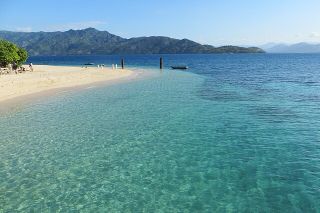
Those visitors arrive expecting beauty, and Haiti's northern coastline delivers. The waters are clear, the beaches are striking, and the mountains that frame the coast create a backdrop that rivals any destination in the region. The challenge has never been the raw material. It has been the infrastructure, the governance, and the security environment required to convert natural assets into sustained economic activity.
What Labadee demonstrates is that international tourists are willing to come to northern Haiti when the conditions are right. The task before Cap-Haïtien's leadership, and before the national government, is to create those conditions not on one privately managed peninsula, but across the city and the surrounding region.

"The argument for Cap-Haïtien is not speculative. It rests on concrete assets that already exist, and a foundation that, with the right investments, can be built upon rapidly."
The Heritage Advantage
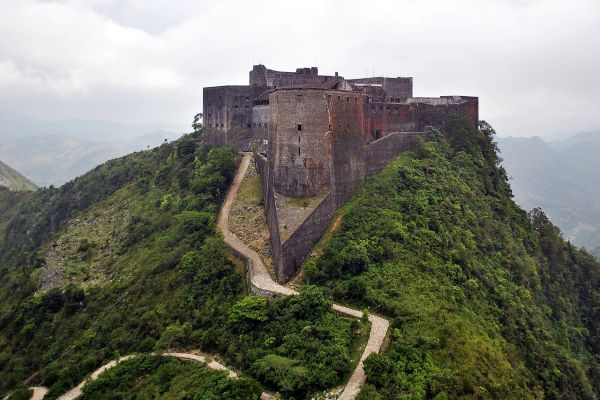
Beyond the coastline, Cap-Haïtien possesses something that no amount of investment can manufacture: an authentic, world-class historical heritage. The Citadelle Laferrière, completed in 1820 under the command of King Henri Christophe, is one of the largest fortresses in the Americas. Rising nearly 3,000 feet above sea level in the mountains outside the city of Milot, it is a monument not only to Haitian independence, but to human ambition and engineering at an extraordinary scale.
Together with the ruins of the Sans-Souci Palace below it, the Citadelle forms a UNESCO World Heritage Site bonanza that is recognized internationally as one of the most significant historical landmarks in the Western Hemisphere. Travelers who visit it routinely describe the experience in terms normally reserved for the great monuments of Europe or the ancient world.
And yet, by any measure of international tourism development, this site remains dramatically undercapitalized. There are few world-class hotels near Milot. The road connecting Cap-Haïtien to the Citadelle requires major improvement and widening. The visitor experience, which should be supported by overnight hotels, interpretation centers, organized tours, and comfortable transportation, remains basic. The potential is there; the development has not followed. This may require an umbrella "Regional Development Authority" under the leadership of the national government's Ministry of Tourism. But it's attainable and achievable.
Strategic Investment Priorities for Cap-Haïtien Tourism
- Airport expansion and improved passenger processing to increase airlift capacity and reduce friction for international arrivals
- Hotel and guesthouse development near the Citadelle corridor, with incentives for both international brands and Haitian-owned properties
- The airport-to-waterfront corridor: repaved roads, proper lighting, commercial zoning, and a strong first-impression gateway into the city
- Waterfront development — pedestrian spaces, restaurants, cafes, and small cultural venues along Cap-Haïtien's natural harbor
- Heritage site infrastructure: interpretation centers, organized tour operators, and quality transportation connecting the city to the Citadelle and Sans-Souci
- Municipal bond financing targeted to diaspora investors for specific, visible infrastructure projects with defined revenue streams
Airport Infrastructure: The Gateway Question
For any city that aspires to grow its tourism economy, the airport is not an amenity. It is the gate through which everything else must pass. Cap-Haïtien's International Airport, which was expanded in recent years, has become an increasingly important entry point for the Haitian diaspora, particularly from the United States and Canada. It has reduced pressure on Port-au-Prince and given the north a direct connection to the outside world.
But the airport's current capacity and facilities fall short of what a serious tourism destination requires. Terminal improvements, expanded passenger processing, and new airline partnerships represent achievable, near-term investments with direct and measurable returns. Every additional flight that lands in Cap-Haïtien rather than Port-au-Prince represents economic activity that stays in the north: hotel rooms, meals, transportation, tours, and shopping that circulate through the local economy.
Equally important is what happens after passengers leave the terminal. The corridor connecting the airport to the city should function as a first chapter in the visitor's story of Cap-Haïtien, communicating immediately that this is a place that has invested in its own future. Repaved roads, proper lighting, organized signage, and a clean, orderly approach into the city are not luxuries. They are the baseline requirements of a functional tourism economy.
The Economic Multiplier
The case for tourism investment in Cap-Haïtien is ultimately a case about economic multiplication. A visitor who arrives in the city does not only generate revenue for the hotel where she sleeps. She generates revenue for the restaurant where she eats, the driver who takes her to the Citadelle, the guide who explains the site's history, the market vendor who sells her artisan goods, the guesthouse owner in Milot, and the dozens of workers and suppliers who support each of those businesses.
This multiplier effect is why tourism is consistently among the highest-value economic sectors for developing economies. The revenue it generates is broadly distributed, labor-intensive in ways that create employment across skill levels, and self-reinforcing because every good experience a visitor has becomes a story told at home, a recommendation to a friend, and a potential future visitor.
For Cap-Haïtien specifically, the multiplier opportunity is compounded by the diaspora factor. Haitian-Americans and Haitians abroad who return to visit family in the north are already functioning as tourists. They are spending money in the local economy. There are untold opportunities and potential to market an improved tourism corridor to weekend visitors for weddings, meetings and conferences, eco-tourism, Foodies and other adventurers from the U.S. and Canada nearby. The question is whether the city's infrastructure and offering can deepen that engagement, extend their stays, and attract their friends and colleagues who are not Haitian but who, given the right conditions, would visit a city of this historical and natural richness.
"Every good experience a visitor has becomes a story told at home, a recommendation to a friend, and a potential future visitor. The multiplier effect is not theoretical. It is the mechanism by which tourism economies grow."
The Governance Imperative
None of this analysis obscures the fundamental condition that makes all of it possible or impossible: governance and security. International tourists, and diaspora visitors seeking to expand their engagement with Cap-Haïtien, will make decisions based on their assessment of safety, reliability, and institutional credibility. A city that cannot guarantee the basic conditions of order cannot build a sustainable tourism economy, regardless of the strength of its natural and cultural assets.
This is why the work being done at the municipal level, including the kind of civic vision articulated by leaders like Mayor Angie Bell, matters as much as any specific infrastructure investment. The signal that a city sends about its own seriousness, its commitment to transparency and accountability, and its capacity to manage public resources responsibly, is itself an economic asset. It shapes investor confidence, diaspora engagement, and the decisions of international organizations about where to direct resources.
Municipal bonds, if properly structured with independent oversight and transparent reporting, could serve as both a financing mechanism and a governance signal. A city that successfully issues and services a diaspora bond demonstrates something that no press release can: that it is capable of managing financial commitments, honoring obligations, and building the institutional trust on which sustained investment depends.