Read this page in English, Français, or Kreyòl
Live page translation
Vol. I  ·  No. 2  ·  July 2026 Issue July 1, 2026 haitianbusinessjournal.com
T   H   E
HAITIAN
BUSINESS
Haitian Coat of Arms
JOURNAL
Economy · Trade · Investment · Diaspora · Development Harold J. Eustache Sr., Esq. · Publisher · Editor in Chief
Vol. I  ·  No. 2  ·  July 2026 Issue
The Rwanda Model for Cap-Haïtien  ·  Follow-Up to the Cover Essay

The Cap-Haïtien Charter:
A Blueprint for the Northern Phoenix

A phased, accountability-driven roadmap applying Rwanda's model of governance, cleanliness, and diaspora investment to Haiti's northern capital

I — Security & Social Contract II — Imihigo Accountability III — Samedi Propre IV — Diaspora Accelerator V — The Citadel Economy A Path Forward
Advertisement
728 × 90 — Top Leaderboard
Policy Blueprint

The Cap-Haïtien Charter:
A Rwanda-Style Blueprint for Haiti's Northern Phoenix

Building on the lessons of Rwanda's transformation, a phased partnership between the Municipal Commission of Cap-Haïtien and H.A.I.T.I.E.N. proposes turning Haiti's second city into a city-state success model, anchored by accountability, cleanliness, and diaspora investment.
By Harold J. Eustache Sr., Esq.  ·  Publisher & Editor-in-Chief  ·  Vol. I, No. 2  ·  July 2026 Issue
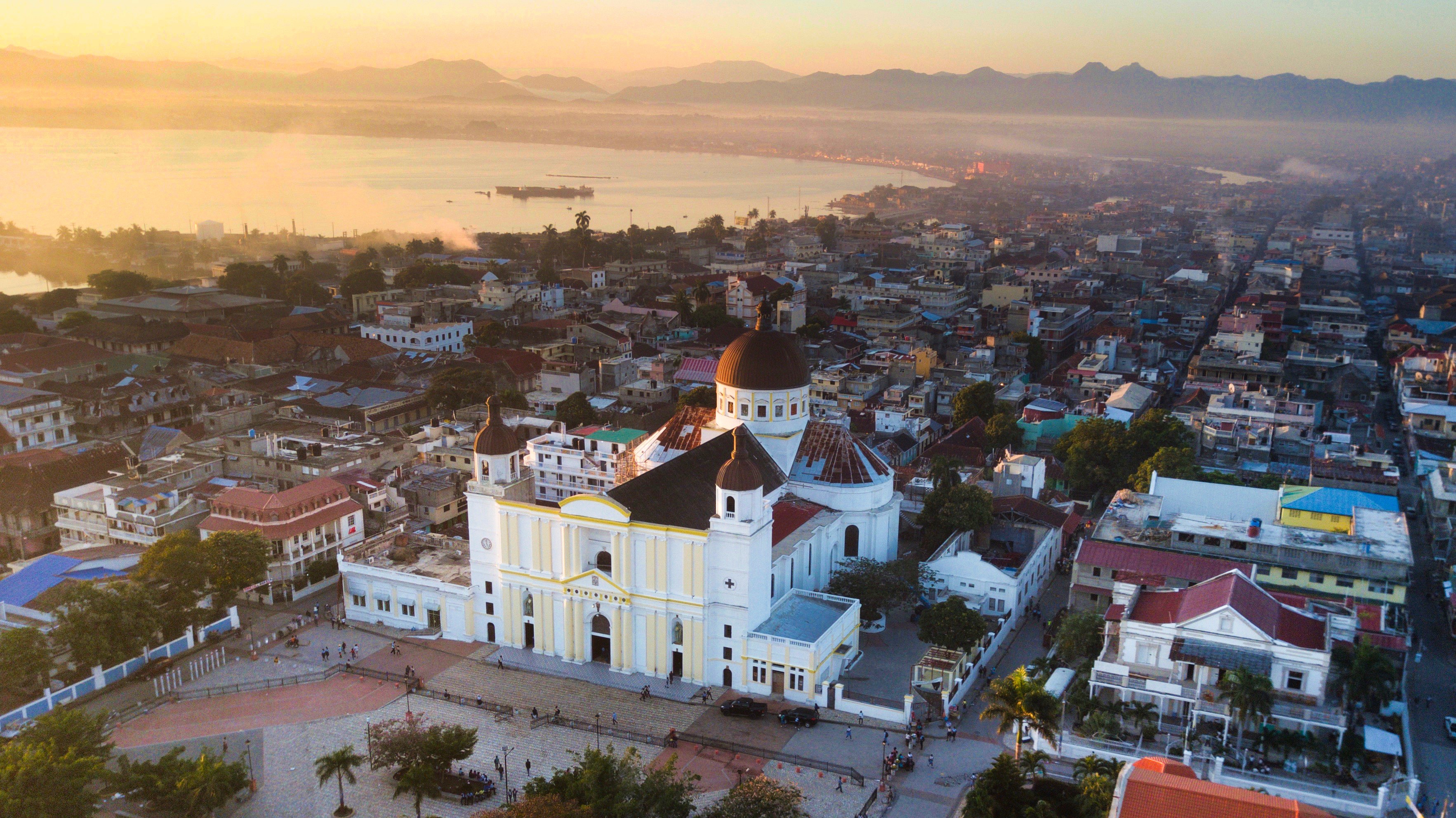
Aerial view of Cap-Haïtien, Haiti
Cap-Haïtien, Haiti's Northern Capital — Aerial View

As our cover essay describes, Rwanda's transformation from the devastation of 1994 into one of Africa's most disciplined economies was not primarily a story of foreign aid or natural resources. It was a story of radical enforcement of order, zero tolerance for corruption, and a culture of accountability built neighborhood by neighborhood, contract by contract. That is Rwanda's "secret sauce," and it travels.

Haiti's national government faces enormous, often intractable, security and governance challenges concentrated in and around Port-au-Prince. But roughly 250 kilometers to the north, Cap-Haïtien presents a different picture: a functioning international airport, a deep-water seaport, a distinct cultural identity rooted in the Citadelle Laferrière and the kingdom of Henry Christophe, and relative insulation from the gang federations that control much of the southern corridor. These factors make Haiti's second city its most credible candidate for a "city-state success model," a contained pilot where Rwanda-style reforms can be implemented, measured, and scaled.

This is the premise behind the Cap-Haïtien Charter, the "Northern Phoenix" initiative: a phased, renewable partnership between the Municipal Commission of Cap-Haïtien and H.A.I.T.I.E.N. (Haitian Advancement, Innovation, Trust, and Integrated Economic Network), a Charlotte, North Carolina-based 501(c)(3) serving as strategic architect, independent auditor, and diaspora liaison. The Charter is organized around five pillars, each adapted from Rwanda's playbook and translated into Haitian institutions and idioms.

I
Pillar One

Security & the Social Contract

Just as Rwanda's transformation could not begin until the killing stopped, Cap-Haïtien's charter cannot begin until residents and investors believe the city is secure. The Charter's first commitment establishes a Special Security District (SSD) covering the historic center, port, and airport corridors, paired with a "Neighborhood Watch" network organized block by block and coordinated with the Haitian National Police (HNP).

This structure deliberately echoes Rwanda's local defense forces, the community-based networks that worked alongside national police to secure neighborhoods after 1994. Security is treated not as a one-time sweep but as an ongoing "social contract": in exchange for protection and street lighting, residents commit to reporting threats and participating in the accountability systems described in the pillars below. Without this precondition, every other pillar of the Charter remains theoretical.
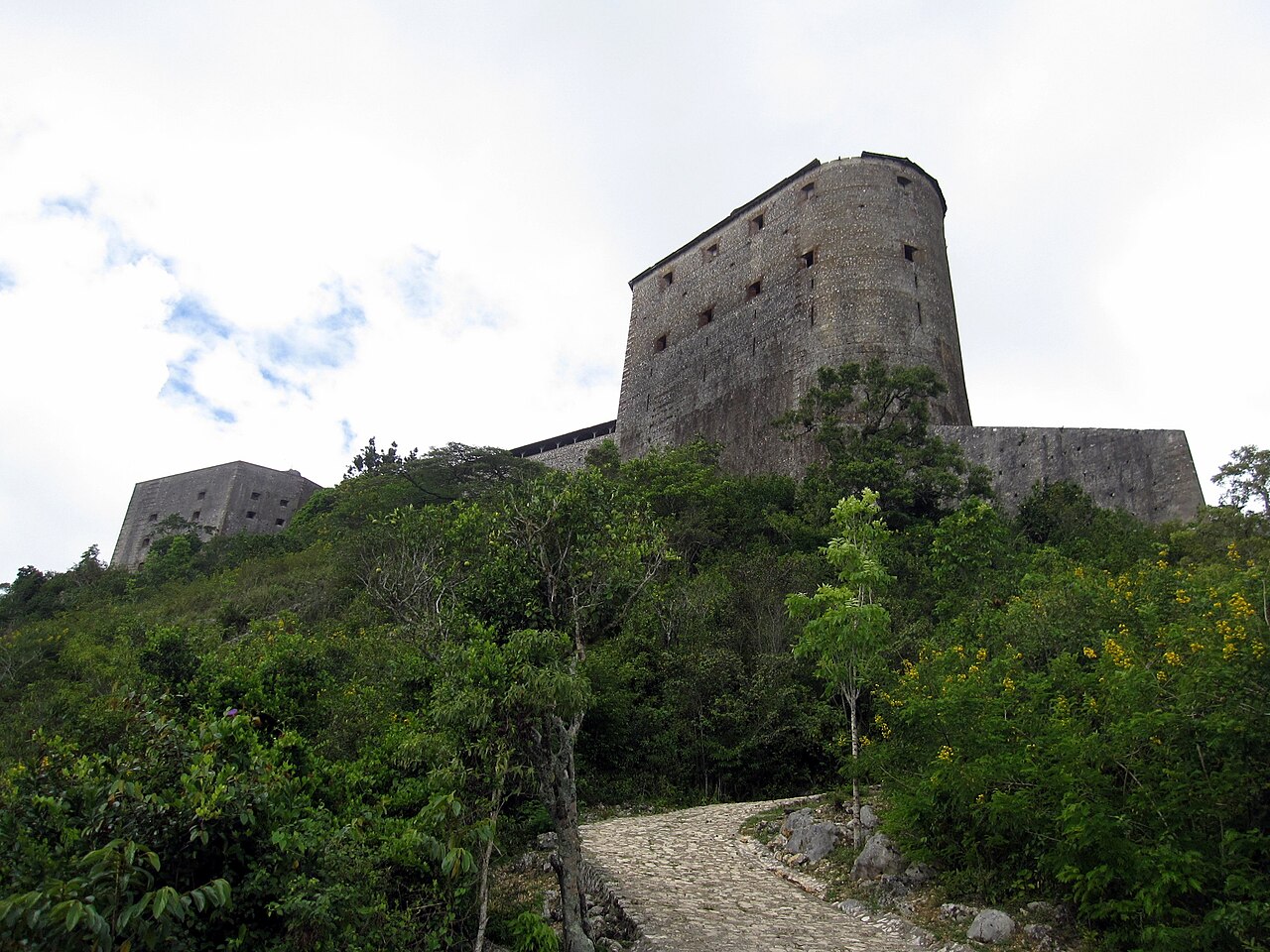
The Citadelle Laferrière, near Cap-Haïtien
The Citadelle Laferrière — the largest fortress in the Americas, a UNESCO World Heritage Site above Cap-Haïtien
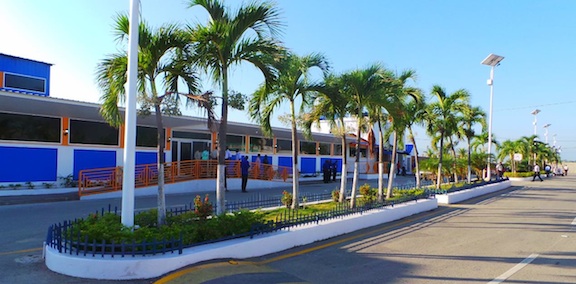
Cap-Haïtien International Airport
Cap-Haïtien International Airport (CAP) — one of the assets that makes the city Haiti's most viable pilot for a city-state success model.
II
Pillar Two

Imihigo: Radical Accountability

At the heart of Rwanda's recovery is Imihigo, a centuries-old Rwandan tradition of public performance contracts, revived as binding annual agreements between local leaders and the central government, with results published for all citizens to see. The Cap-Haïtien Charter adapts this directly: under the Charter's Imihigo pillar, H.A.I.T.I.E.N. acts as an independent auditor, publishing a quarterly "City Scorecard" that tracks the municipal government's progress against a small set of measurable targets, among them, 90 percent trash collection in the historic center within twelve months, and business permit processing reduced to 48 hours.

To make these scorecards usable by ordinary citizens rather than just policymakers, the Charter calls for a mobile application built on the Base44 platform and known locally as "K-Pab," a Kreyòl rendering of kapab, meaning "capable." Modeled on Rwanda's Irembo and Imihigo.rw digital portals, K-Pab lets residents photograph and geotag problems, a broken streetlight, an uncollected pile of trash, an unusually long line at a permit office, automatically routes the report to the responsible municipal supervisor, and lets the same resident confirm, with a single tap, whether the issue was actually resolved. H.A.I.T.I.E.N.'s audit team receives a copy of every report, closing the loop between citizen complaint and verified outcome.

90%
Target trash-collection rate for Cap-Haïtien's historic center within 12 months under the Charter's Imihigo pillar, modeled on Rwanda's performance-contract system and tracked publicly via the K-Pab app.
III
Pillar Three

Samedi Propre: The Clean City Movement

Rwanda's Umuganda, a mandatory monthly day of community service in which government officials and ordinary citizens together clean streets, repair public infrastructure, and maintain shared spaces, did more than beautify Kigali. It rebuilt a sense of shared ownership and civic pride that had been shattered by genocide. The Charter's third pillar, "Samedi Propre" (Clean Saturday), translates this practice for Cap-Haïtien: on the last Saturday of every month, the City provides security and logistical support while residents, merchants, and municipal workers jointly clean and restore neighborhoods, with particular attention to the city's gingerbread-style colonial architecture, an irreplaceable tourism asset that has suffered decades of neglect.

To sustain participation beyond civic spirit alone, the Charter establishes a Community Incentive Fund, managed jointly by the City and H.A.I.T.I.E.N., that rewards the cleanest and most improved neighborhoods each quarter with tangible infrastructure grants, solar streetlights, repaired drainage, repainted facades. The goal mirrors Rwanda's experience: cleanliness becomes self-reinforcing once residents can see, and benefit from, the results of their own labor.

IV
Pillar Four

The Diaspora Accelerator

Rwanda's Development Board became internationally known for cutting business registration time from weeks to roughly six hours, an enormous psychological signal to investors that the country was serious about reform. The Charter's fourth pillar creates a Cap-Haïtien equivalent: a "One-Stop Shop," physical and digital, where members of the Haitian diaspora can register a business, verify a land title, and resolve tax questions in a single visit or session, with legal vetting provided in partnership with H.A.I.T.I.E.N.

Alongside the One-Stop Shop, the Charter calls on the City to designate Special Economic Zone (SEZ) status for the port and airport corridors, with tax incentives calibrated to attract the kind of diaspora-funded small and mid-sized businesses, restaurants, guesthouses, logistics firms, light manufacturing, profiled elsewhere in this issue. A real-time investor portal, maintained by H.A.I.T.I.E.N., gives prospective diaspora investors visibility into available land, permitting status, and security conditions before they commit capital.

V
Pillar Five

The Citadel Economy: Tourism & Heritage

Rwanda turned its mountain gorillas into one of the most successful eco-tourism brands in Africa, generating revenue that directly funds conservation and community development. Cap-Haïtien possesses a comparable, underused asset in the Citadelle Laferrière, the largest fortress in the Americas and a UNESCO World Heritage Site, perched in the mountains above the city. The Charter's fifth pillar establishes a secure tourism corridor connecting Cap-Haïtien's airport directly to the Citadelle, the Sans-Souci Palace ruins, and the historic district, what the Charter calls the "Citadel Economy."

To staff this corridor, the Charter partners with local vocational schools to train a "Tourism Corps," guides, drivers, and hospitality staff fluent in Kreyòl, French, and English, creating a visible career pathway for young residents while ensuring visitors interact with trained, vetted personnel. As with every pillar of the Charter, success here depends on the security and cleanliness gains of Pillars I and III; tourism cannot be marketed faster than it can be made safe and presentable.

Advertisement
728 × 90 — Mid-Content

Rwanda & Cap-Haïtien: A Strategic Comparison

The Charter's five pillars are direct translations of a Rwandan governance toolkit, mapped onto Cap-Haïtien's specific institutions and geography. The table below summarizes the Strategic Implementation Matrix at the center of the Charter.

Strategic Pillar Rwanda's Model Cap-Haïtien's Application Priority Action
I — Security Local defense forces coordinated with national police Special Security District + Neighborhood Watch with HNP Establish SSD boundaries; recruit and train Neighborhood Watch coordinators
II — Accountability Imihigo performance contracts; Irembo digital portal City Scorecard audited by H.A.I.T.I.E.N.; "K-Pab" citizen-reporting app Sign 3-year MOU; launch K-Pab beta in one neighborhood
III — Cleanliness Umuganda monthly community service "Samedi Propre" + Community Incentive Fund Schedule first Clean Saturday; define incentive criteria
IV — Economy Rwanda Development Board; six-hour business registration Diaspora One-Stop Shop + SEZ at port/airport corridors Designate SEZ boundaries; staff One-Stop Shop pilot office
V — Tourism Mountain-gorilla eco-tourism revenue model Citadel Economy corridor + Tourism Corps Secure airport-to-Citadelle corridor; launch Tourism Corps training cohort
A Path Forward

The Northern Phoenix Can Rise

Rwanda's transformation took three decades and required, above all, the political will to enforce order and accountability without exception. The Cap-Haïtien Charter does not promise to solve Haiti's national crisis. It proposes something narrower and, for that reason, more achievable: a contained, three-year, renewable agreement between a willing municipal government and a diaspora-led nonprofit, with success measured in trash collected, permits processed, and visitors welcomed, not in promises made.

The Charter includes its own exit clause: if the City misses 70 percent of its Imihigo targets for two consecutive quarters, H.A.I.T.I.E.N. freezes the Community Incentive Fund until performance recovers. This is not a punitive measure so much as an honest one, the same honesty that allowed Rwanda's leaders to tell their own citizens the truth about how far the country had to go, and then to prove, quarter by quarter, that the distance was closing.

If the Cap-Haïtien Charter succeeds, even partially, it becomes a template, for Gonaïves, for Jacmel, for Les Cayes, and eventually, perhaps, for the national government itself. Rwanda did not transform overnight, and neither will Haiti's north. But a phoenix, by definition, rises from what came before. The work, as our cover essay concludes, begins with a choice.

"The Northern Phoenix does not require Haiti to become Rwanda. It requires Cap-Haïtien to become accountable to itself."
Harold J. Eustache Sr., Esq.
Publisher & Editor-in-Chief  ·  The Haitian Business Journal
Advertisement
728 × 90 — Footer Leaderboard