Read this page in English, Français, or Kreyòl
Live page translation
Vol. I  ·  No. 1  ·  First Issue June 1, 2026 HAITIANBUSINESSJOURNAL.COM
T   H   E
HAITIAN
BUSINESS
Haitian Coat of Arms
JOURNAL
Economy · Trade · Investment · Diaspora · Development Harold J. Eustache Sr., Esq. · Editor in Chief

Building Haiti's Next Economy:
A Roadmap From the Ground Up

Singapore's Transformation: From Third World to First
— Lessons for Haiti

By Harold J. Eustache Sr., Esq.  ·  Editor in Chief, The Haitian Business Journal  ·  Inaugural Issue

Advertisement
728 × 90 — Leaderboard Banner
Prime placement · Inaugural Issue · Contact: advertising@haitianbusinessjournal.com
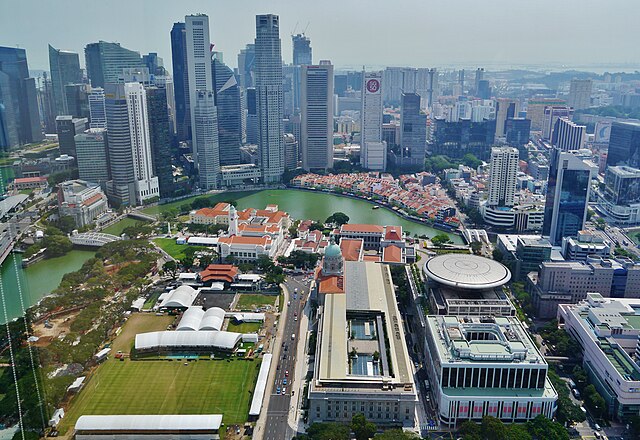
Singapore Marina Bay skyline
Singapore Marina Bay Skyline.

Just as the Haitian Revolution that led to the birth of Haiti as a nation was a unique and transformative human accomplishment at the dawn of the 19th Century, Singapore's transformation from 1959 to 2015 is arguably the most dramatic economic development success story in human history. In a single generation, Singapore went from a poor, overcrowded, colonial port city with no natural resources, endemic corruption, racial tensions, and limited manufacturing capacity to a gleaming global financial center, one of the world's cleanest and most efficient cities, a beacon of anti-corruption governance, and a top-10 global economy by per capita income.

Similar to the accomplishments of two of the greatest military minds of all time, Haiti's Toussaint Louverture and Jean-Jacques Dessalines, Singapore's transformation was orchestrated by Lee Kuan Yew, a visionary leader who ruled Singapore for 31 years (1959–1990) and shaped the nation's development for decades after. This essay examines the mechanisms of Singapore's success and explores what Haiti might learn and adopt from Lee's model, not as a blueprint to be copied blindly because the cultures and issues are very different, but as a mirror in which Haiti's own possibilities come into clearer focus.

Singapore Marina Bay skyline
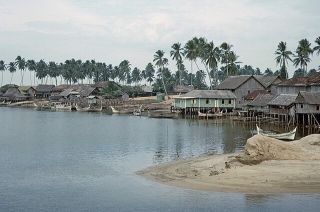
Singapore/Kampong, 1964: overcrowded, impoverished, with no natural resources and an uncertain future.
Singapore Marina Bay skyline
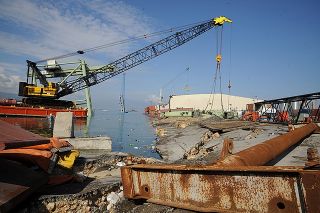
Port-au-Prince, 2011: a city of resilience and potential, facing deep challenges that strong leadership and strategy could help transform.
Part One

Singapore's Starting Point — 1959

The Crisis at Independence

When Singapore separated, or more accurately, was booted off the Federation of Malaysia in 1965, it faced what many international observers considered an impossible situation. Lee Kuan Yew himself later wrote that Singapore's survival seemed "a miracle." The challenges were formidable: no natural resources whatsoever, high unemployment, a city of 1.5 million people crammed into 225 square miles, simmering racial and religious tensions between Chinese, Malay, and Indian communities, a legacy of colonial corruption with little if any institutional capacity, and the sudden loss of the Malaysian hinterland upon which its economy depended.

International economists predicted failure. Singapore was, in the eyes of the world, a failed city-state at inception with no right to exist, and certainly no path to prosperity.

Challenge Singapore (1959) Haiti (2024)
Natural ResourcesNone; complete dependence on tradeLimited; agriculture, tourism potential
InfrastructureColonial-era, inadequateSeverely deficient; violence-damaged
CorruptionEndemic; British colonial legacyEndemic; institutional paralysis
SecurityStable post-independence; no gangsCrisis: gang violence paralyzes cities
InstitutionsMinimal capacity; colonial remnantsCollapsed; weak government
Social CohesionFragmented (racial/religious); tenseFragmented (class/historical); violent
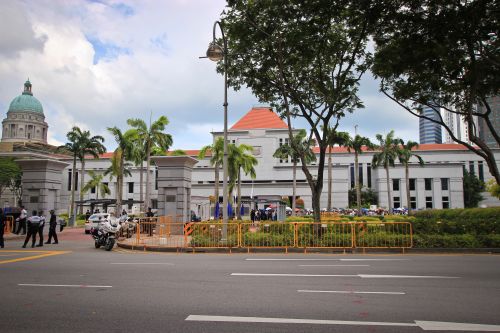
Singapore Parliament House
Singapore Parliament House.
Part Two

Lee Kuan Yew's Vision and Leadership Model

Lee Kuan Yew was Singapore's founding Prime Minister and the architect of its dramatic transformation. Educated at Cambridge University and fluent in both English and Mandarin, he was pragmatic and results-oriented, not ideologically bound to Western or Eastern models, but willing to borrow from both. He practiced law and understood the importance of institutions. And when he took power in 1959, he articulated a simple but audacious vision: Singapore would transform itself from a colonial outpost into a modern, developed nation.

He called his approach "pragmatic autocracy," a strong, efficient, sometimes paternalistic state, but one accountable to results rather than connected to elite enrichment. "If you are not convinced of the rightness of your position," he said, "you will not be able to convince others."

"The difference between Singapore's success and Haiti's current challenges is not capability or resources. It is leadership and choices."
— Harold J. Eustache Sr., Esq., Editor in Chief

Pillar 1: Meritocratic, Anti-Corruption Government

Lee's first priority was to establish a government that was competent, honest, and efficient. He recruited top graduates and paid them competitive salaries, established transparent budgets and clear procedural rules, aggressively prosecuted corruption at every level, including powerful figures, and built a civil service where promotion was based purely on ability. The result was an honest, efficient state that investors could rely on. Contracts were honored. Corruption was punished.

Pillar 2: Strategic, Export-Oriented Economic Policy

Lee rejected central planning and isolationist autarky. Instead, he opened Singapore's economy to the world: low tariffs, active foreign investment recruitment, export orientation over domestic consumption, and first-mover advantage in emerging industries: petrochemicals, shipbuilding, electronics, and eventually finance. He actively recruited multinationals, including Shell, Hewlett-Packard, and Toyota, to set up operations in Singapore, bringing technology, jobs, and expertise. State enterprises like Singapore Airlines were run professionally and competitively.

Pillar 3: Massive Investment in Education

Singapore's only resource was its people. Lee invested heavily in education from day one: universal primary and secondary schooling, technical and vocational institutes, and eventually world-class universities. English was adopted as the language of government and business to facilitate international commerce, while mother-tongue languages were preserved. Selection into better schools was purely merit-based, creating powerful incentives for hard work across all social classes.

Singapore Parliament House
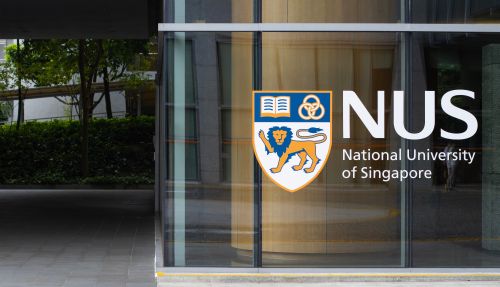
Singapore National University.

Pillar 4: Infrastructure Development

Lee invested heavily in ports, roads, public housing, utilities, and eventually Changi Airport, which became one of the world's finest. By 2000, 80% of Singaporeans lived in government-owned public housing of genuine quality. Industrial estates were developed with basic services, attracting manufacturers with ready-made infrastructure.

Pillar 5: Strict Law, Order, and Anti-Crime Policy

Lee used strict laws and severe penalties to deter crime and corruption: mandatory death penalty for drug trafficking, long prison sentences and asset seizure for corruption, and significant fines for public disorder including littering. These laws were internationally controversial, but they created an orderly, safe society where businesses could operate without fear and citizens felt genuinely secure.

Pillar 6: Social Cohesion and National Identity

With multiple ethnic and religious groups, Lee made racial harmony a top priority. Public housing was designed to ensure racial mixing. A "Singaporean" identity was promoted above ethnic identity through school curriculum, national symbols, and meritocratic advancement. By the 1980s, Singapore had largely overcome the racial tensions that had nearly torn it apart in the 1960s.

Advertisement
468 × 60 — Inline Banner
Reach Haiti's business community · [email protected]
Part Three

Implementation — How Lee Transformed Singapore

140×
Singapore's GDP per capita grew 140 times in a single generation, from approximately $400 in 1959 to $55,000 by 2015. No country in modern history has achieved a comparable transformation.

Phase 1 (1959–1970): Stabilization and Foundation

Lee's first priority was establishing stable, efficient government and attracting investment to create jobs. He launched an anti-corruption campaign, established the Corrupt Practices Investigation Bureau (CPIB) with high-profile prosecutions, launched the Housing and Development Board to address the housing crisis (by 1970, over 50% of Singaporeans lived in public housing), developed Jurong Industrial Estate as a manufacturing zone, upgraded Singapore's port, expanded school enrollment dramatically, and managed racial tensions through integration and enforcement. By 1970, GDP had grown significantly, unemployment had declined, and Singapore was perceived internationally as stable and honest.

Phase 2 (1970–1985): Rapid Growth and Diversification

With foundations in place, Singapore moved into rapid growth. Electronics, petrochemicals, and shipbuilding flourished. Hewlett-Packard, Seagate, and dozens of other multinationals expanded. Singapore liberalized financial markets and became a regional financial center. Changi Airport opened in 1981. MRT construction began. Singapore Airlines launched in 1972 and became the world's flagship carrier. Workers shared in prosperity as wages rose. By 1985, GDP per capita had grown 4–5 times from 1959.

Phase 3 (1985–2000): Upgrading and Global Integration

Singapore shifted from low-cost manufacturing to higher-value services and technology. It moved up the electronics value chain, expanded banking and forex trading, became the world's busiest transshipment port, developed world-class universities, and became a medical tourism hub. By 2000, GDP per capita had reached approximately $20,000 — 50 times what it had been in 1959.

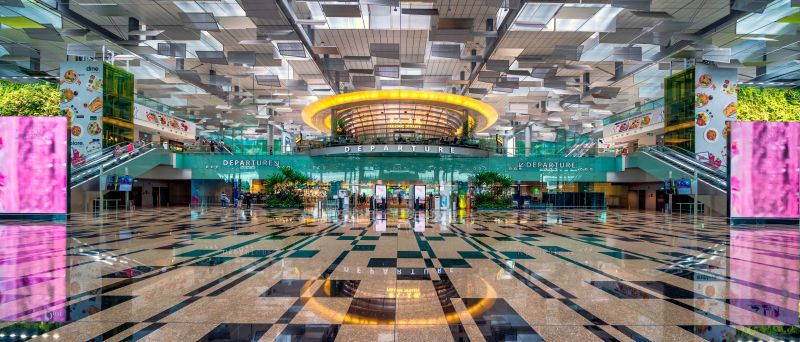
Singapore Airport
Singapore's Gleeming Airport
Part Four

The Mechanisms Behind Singapore's Success

Many developing countries have adopted similar policies, including open markets, education investment, infrastructure development. Why did Singapore succeed where others failed? The answer lies in execution: Lee's willingness to implement policies consistently, completely, and without compromise.

Execution: The Forgotten Factor in Development

Development economists focus on policies. But execution, actually implementing what you say you will do, is often neglected. Singapore succeeded because policies were consistent across decades, fully implemented rather than half-measures, and accountable to results. Lee had the political will to implement policies even when unpopular. He thought in 20–30 year time horizons rather than electoral cycles. And crucially, meritocracy and anti-corruption prevented elites from capturing the state for personal gain, the fatal flaw in so many other developing nation stories.

The Soft Power of a Clean, Efficient State

Singapore's cleanliness and order are not incidental to its success; they are central to it. A clean, orderly city creates powerful positive feedback loops: investor confidence, tourist attraction, citizen morale, international reputation, and a culture of discipline that extends to workplace safety, financial responsibility, and public health. Singapore's cleanliness is not a luxury. It is integral to development. Haiti should adopt aggressive cleanliness as policy from day one.

"Singapore's low corruption is not a side benefit — it is foundational to everything else. Without anti-corruption efforts, nothing else will work."
— From the Essay
Part Five

Singapore's Caveats — and Haiti's Current Context

Singapore's development came at real costs: limited political freedoms, tightly controlled opposition, restricted press, and controversial social regulations including caning. These trade-offs remain debated internationally. Lee justified them as necessary for stability and development. Whether democracy could have coexisted with Singapore's growth is a question that history cannot definitively answer. What is clear is that Singapore maintained rule of law and transparent governance, even where political liberty was constrained.

Meanwhile, inequality grew as Singapore prospered. The Gini coefficient rose from 0.43 in 1970 to 0.48 by 2000. A large migrant worker population earned low wages. Access to quality education varied. These are honest caveats that any country adapting Singapore's model must address from the outset rather than in retrospect.

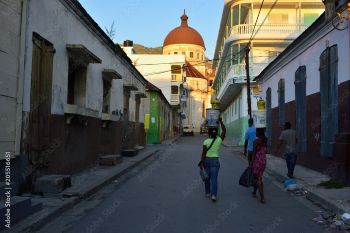
Cap-Haitien Street
Cap-Haitien Street

Haiti's Current Context — 2024

Haiti today faces challenges both similar to and different from Singapore in 1959. Unlike Singapore, which had stable governance but limited resources, Haiti faces institutional collapse and violence simultaneously. Gangs control much of Port-au-Prince. Over 60% of the population lives in poverty. GDP has stagnated. Educated Haitians continue to emigrate, creating a devastating leadership vacuum. Environmental degradation is severe. And the weight of colonial trauma, the indemnity paid to France, and decades of external interference have left deep institutional distrust.

The critical difference from Singapore: Haiti must first solve the security crisis before development can begin. Singapore already had stability; it just needed prosperity. Haiti needs both. This does not make transformation impossible. It makes the sequence of priorities non-negotiable.

Part Six

Haiti's Path Forward — Applying Lee's Model

Jacmel Mardigras
Haiti possesses natural assets of genuine value: beaches, mountains, Hispaniola biodiversity, and a rich cultural heritage. Like Singapore's port geography, these are strategic assets that, with security and investment, could power a tourism and hospitality sector employing millions.

Precondition: Security First

Lee's model assumes a stable government with authority to implement decisions. Haiti lacks this. Without security and government control, nothing else is possible. Security forces must be rebuilt, recruited from communities, trained to professional standards, and deployed against gangs with overwhelming force. International support is useful but cannot substitute for Haitian ownership of the process. External forces cannot sustain order long-term. The timeline: 2–5 years to establish basic security; 10 or more years to fully consolidate control. This is not pessimism; it is the honest cost of the current crisis.

Core Element 1: Honest, Efficient Government

Once security is established, Haiti's next priority should be building a meritocratic, anti-corruption government. This is the single most important long-term factor in Lee's model. Haiti needs a leader, a president or prime minister, who is determined to eliminate corruption and has the power to do so. This person must be seen as driven by national interest, not personal enrichment. An independent anti-corruption agency with real prosecutorial power, transparent budgets, adequate civil service pay, mandatory asset declarations, and above all the cultural message that corruption is shameful and will be punished.

Core Element 2: Massive Investment in Education

Haiti's human capital is its only major resource, like Singapore's. Free or subsidized universal primary enrollment with meals included, well-trained and well-paid teachers, strong secondary expansion, genuine Creole literacy alongside English fluency for international opportunity, aggressive STEM emphasis, and vocational training for those who don't pursue university; all of this together constitutes the most powerful investment Haiti can make. Education is expensive upfront and pays enormous dividends over decades. Lee understood this and made it non-negotiable.

Core Element 3: Export-Oriented Economic Development

Haiti's economy cannot grow large enough on domestic consumption alone. Haiti needs to produce for export markets: manufacturing, tourism, agricultural value-added products, and financial and business services. Haiti has abundant labor and a critical geographic advantage: proximity to the United States, the world's largest market. Shipping is faster and cheaper than from Asia. Special economic zones with infrastructure and streamlined regulation can attract manufacturers. Tourism can leverage Haiti's genuine natural and cultural assets. Processing coffee, cacao, and tropical fruits locally rather than exporting them raw captures significantly more value per unit. The Haitian diaspora represents both an export market for Haitian products and a source of investment capital.

Core Element 4: Infrastructure

Haiti's infrastructure is severely deficient. Priority investments include roads connecting Port-au-Prince to Cap-Haïtien, Les Cayes, and the interior; modernization of its ports for container and break-bulk cargo; expanded electricity generation with preference for renewable energy; modernized water and sanitation systems; mobile and fiber optic telecommunications; development of the Cap-Haïtien Airport as an independent economic engine in the North; and public housing programs for low-income urban populations. Infrastructure is expensive, but it creates jobs during construction, enables private investment once complete, and improves quality of life. It is not optional.

Core Element 5: Environmental Restoration

Haiti's environmental degradation is severe but reversible. Singapore showed that environmental quality can be restored even under dense urban pressure. A mass reforestation program targeting a return from the current roughly 2% forest coverage to 25% over 20 years, combined with watershed protection, proper waste management in cities, protected marine areas, sustainable agroforestry, and aggressive enforcement against illegal logging: this is not an environmental luxury. A clean, green Haiti is more attractive to investors and tourists, better for citizens' health, and more resilient to the hurricanes and earthquakes that will continue to threaten the island.

Core Element 6: Social Cohesion and National Identity

Haiti has deep historical divisions of class, color, and geography. Like Singapore with its ethnic tensions, Haiti must deliberately build national cohesion. A vision of shared Haitian identity and destiny, celebrated through culture, history, and the extraordinary story of the world's first Black republic, must be fostered alongside inclusive development that genuinely benefits all regions and classes, land redistribution to address historical seizures, and the powerful meritocracy message: advancement based on ability, not connections. The Haitian diaspora must be engaged not as remittance machines but as partners in the national vision.

Advertisement
728 × 90 — Mid-Article Leaderboard
Targeted placement mid-content · High engagement zone · [email protected]
Part Seven

A Phased Roadmap for Haiti

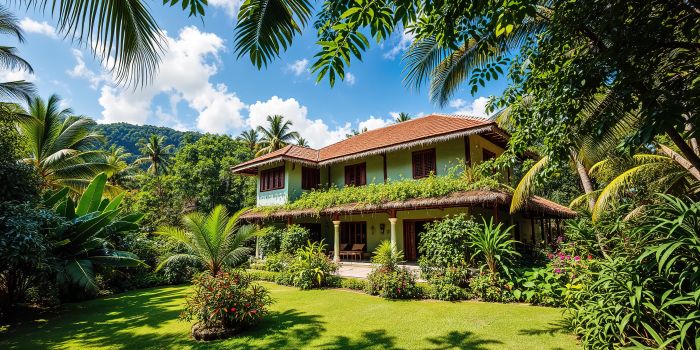
Jacmel Home
House in Jacmel, Haiti - Development must reach all of Haiti's ten departments, not just Port-au-Prince. Secondary cities including Cap-Haïtien, Les Cayes, Jérémie, and Gonaïves must develop as regional economic centers alongside the capital.
Phase One · Years 1–5
Foundation: Security, Governance, and Political Will
  • Security: Establish functioning police; neutralize gang violence in Port-au-Prince and major cities. This is the prerequisite for everything.
  • Governance: Anti-corruption campaign; transparent budgeting; meritocratic civil service.
  • Education: Expand primary enrollment; begin teacher training; establish quality standards.
  • Infrastructure: Begin road rehabilitation; upgrade Port-au-Prince port; expand electricity.
  • Economic Policy: Open economy; reduce tariffs; establish special economic zones; recruit first manufacturers.
  • Environment: Launch reforestation campaign; establish waste management; begin protected areas.
  • Diaspora: Begin engagement with diaspora for investment and expertise.
Success Indicators: Violence declining in Port-au-Prince; government receives public approval; primary enrollment >80%; first manufacturing plants operating; international investors expressing confidence.
Phase Two · Years 5–15
Growth: Expanding Gains Across All Departments
  • Security: Extend police presence nationwide; consolidate rule of law.
  • Economy: Manufacturing growing; tourism developing; financial services expanding. Target: GDP growth 5–7% annually.
  • Infrastructure: Roads connecting all regions; electricity reaching 70%+ of population.
  • Education: Universal primary enrollment; expand secondary; develop universities.
  • Regional Development: Cap-Haïtien, Les Cayes, and secondary cities developing as economic centers.
  • Environment: Reforestation visible; protected areas established and effective.
Success Indicators: GDP per capita doubled from baseline; poverty declining; unemployment below 8%; manufacturing exports growing; Port-au-Prince reputation improving.
Phase Three · Years 15–25
Consolidation — Sustained, Inclusive Growth
  • Governance: Transition toward more inclusive institutions while maintaining anti-corruption and efficiency.
  • Economy: Diversified; major manufacturing presence; financial services; tourism; modernized agriculture.
  • Infrastructure: Universal electricity; modern transportation networks; digital connectivity.
  • Institutions: Strong institutions ensuring continuity beyond individual leaders.
  • Equality: Reduced inequality; expanded middle class; genuine opportunity for all.
  • Environment: Forest coverage restored to 20%+; environmental quality high.
Success Indicators: Haiti no longer aid-dependent; GDP per capita $5,000+; majority middle class; literacy >95%; life expectancy >75 years; Haiti viewed as a regional leader.
Part Eight

Critical Challenges and Risks

The roadmap is clear. The risks are equally clear, and they deserve honest acknowledgment.

The most fundamental challenge is leadership. Lee Kuan Yew was an exceptional figure, intelligent, visionary, determined, and trusted. Haiti's history of contested elections, weak leadership, and elite resistance makes the emergence of comparable leadership uncertain. A leader or coalition must emerge with clear vision for Haiti's development, the political power to implement decisions, genuine integrity and commitment to anti-corruption, willingness to make hard choices, and the ability to maintain focus for 10–20 years. Without this, the model fails at the first step.

Gang violence is Haiti's second unique challenge; Singapore had no equivalent. Defeating entrenched gang violence requires overwhelming force, willingness to incur casualties, credible gang exit and rehabilitation programs, job creation to address root causes, international support, and sustained effort over five or more years. If gang violence cannot be controlled, development is impossible.

Elite resistance poses a third structural challenge. Haiti's elites have benefited from disorder, through corruption, land control, and monopolies. They will resist anti-corruption and land redistribution. A leader must have the power to overcome this resistance or the capacity to build a coalition broad enough to make it politically costly.

International dependency through aid, if poorly managed, can distort development rather than enabling it. Haiti must use external assistance strategically to build self-reliance, not dependency. And it must be frank with donors: aid conditioned on structural adjustment that has not delivered results for 30 years requires renegotiation.

Brain drain, the continued emigration of Haiti's educated population, must be reversed not through restrictions but through the creation of opportunities compelling enough to make Haitians want to stay, and eventually to return.

Jacmel Home
The Haitian diaspora, estimated at over 1.5 million people in the United States alone, with significant communities in Canada, France, and across the Caribbean, represents not just remittances but investment capital, professional expertise, and political advocacy that is essential to Haiti's transformation.

Can Haiti Become the Singapore of the Caribbean?

Lee Kuan Yew transformed Singapore from an impoverished, overcrowded colonial port city into one of the world's most developed nations in a single generation. The transformation was not inevitable. In 1959, experts predicted Singapore would fail. Yet through visionary leadership, meritocratic governance, strategic economic policy, massive education investment, and infrastructure development, Singapore succeeded in ways that permanently changed the arc of human development thinking.

Can Haiti achieve something similar? The honest answer is: yes, but only under very specific conditions. Haiti faces different challenges than Singapore faced, most critically, it must first establish security and government control, challenges Singapore did not face. But once security is established, Haiti can learn from Lee's model. Build honest government. Invest in education. Develop manufacturing and tourism. Build infrastructure. Create conditions for private investment. Engage the diaspora as genuine partners. Make Haiti clean, green, and orderly. Over 20–30 years, Haiti could transform.

Haiti's current poverty, violence, and dysfunction are tragic and urgent. But they are not inevitable. With leadership, strategy, and commitment, Haiti could become the Singapore of the Caribbean, not identical to Singapore, which has different resources and geography, but similarly transformed in its arc, its ambition, and its results.

Lee Kuan Yew believed Singapore's transformation was possible when experts said it was impossible. He was right. Haiti needs leaders with the same vision and determination. If they emerge, Haiti can transform. The Haitian Business Journal exists in the belief that this transformation is not only possible but necessary, and that business, trade, investment, education, and the extraordinary energy of the Haitian diaspora are the engines that will power it.

"The difference between Singapore's success and Haiti's current challenges is not capability or resources. It is leadership and choices. If Haiti's leaders choose development over corruption, inclusion over elitism, long-term thinking over short-term gain, Haiti can transform. The path is clear. The question is whether Haiti will walk it."
Advertisement
728 × 90 — Footer Leaderboard
High-visibility footer placement · [email protected]
Economy · Trade · Investment · Diaspora · Development Inaugural Issue · June 1, 2026 haitianbusinessjournal.com